| Further publications / new titles in the WISDOM-Series | |||||
 |
|||||
 |
 |
 |
 |
 |
 |
 |
 |
 |
 |
 |
 |
 |
 |
 |
 |
 |
 |
Karl H. Müller:
The New Science of Cybernetics
The Evolution of Living Research Designs
Vol. 1 : Methodology

Niko Tos Ι Karl H. Müller [eds]:
Political Faces of Slovenia
Political Orientations and Values at the End of the Century

Albert Müller Ι Karl H. Müller [Eds.]:
An Unfinished Revolution?
Heinz von Foerster and the Biological Computer Laboratory (BCL), 1958–1976

Richard Jung:
Experience and Action.
Selected Items in Systems Theory.
Wien, 2007
ISBN 978-3-901941-13-9

Ranulph Glanville Ι Alexander Riegler [Eds.]:
The Importance of Being Ernst.
Festschrift for Ernst von Glasersfeld.
Wien, 2007
ISBN 978-3-901941-14-6

Ranulph Glanville Ι Karl H. Müller [Eds.]:
Gordon Pask, Philosopher Mechanic
An Introduction to the Cybernetician's Cybernetician
Wien, 2007
ISBN 978-3-901941-15-3

Karl H. Müller:
The New Science of Cybernetics
The Evolution of Living Research Designs
Vol. 2 : Theory

Niko Tos Ι Karl H. Müller Ι Zoltan Fábián Ι Jindrich Krejcí Ι Marcel Zielinski [Eds.]:
Three Roads to Comparative
Research:
Analytical, Visual, Morphological
Vienna, 2009
ISBN 978-3-901941-17-7

Gonçalo M. Furtado C. Lopes:
Gordon Pask’s Encounters:
From a Childhood Curiosity to the Envisioning of an Evolving Environment -
Exchanges
between Cybernetics and Architecture
Vienna, 2010, ISBN 978-3-901941-18-4

Ranulph Glanville
The Black Boox
Vol. I
Cybernetic Circles
ISBN 978-3-901941-19-1

Ranulph Glanville
The Black Boox, Vol. 2
to be released November 2013
ISBN 978-3-901941-18-4
Ranulph Glanville
The Black Boox
Vol. III
39 Steps
ISBN 978-3-901941-21-4

Karl H. Müller:
The New Science of Cybernetics
The Evolution of Living Research Designs
Vol. 3 Research and Design Rules

Kajfez-Bogataj Ι Müller Ι Svetlik Ι Tos (Eds.): Modern RISC-Societies
Towards a New Paradigm for Societal Evolution
Vienna, 2010
ISBN 978-3-901941-23-8

J. Rogers Ellen & Jane Hollingsworth :
Major Discoveries, Creativity,
and the Dynamics of Science
Vienna, 2011,
ISBN 978-3-901941-24-5

Gordon Pask :
The Cybernetics of Self-Organisation,
Learning and Evolution.
Papers 1960-1972
Vienna, 2011
ISBN 978-3-901941-25-2

Bernard Scott :
Explorations in Second-Order Cybernetics
Reflections on Cybernetics, Psychology and Education
Vienna, 2011
ISBN 978-3-901941-26-9

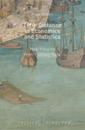
Pavle Sicherl :
Time Distance in Economics and Statistics.
New Insights from Existing Data
Vienna, 2012
ISBN 978-3-901941-27-6

|
Ranulph Glanville Ι Karl H. Müller [Ed.]
Gordon Pask, Philosopher Mechanic An Introduction to the Cybernetician’s Cybernetician © 2007 edition echoraum Format 150 x 230 mm, hardcover, englisch, 240 S. s/w-Tabellen, -Abbildungen und Photographien Euro 24,50 excl. Versand und Porto ISBN 978-3-901941-15-3 >> Bei Amazon bestellen Ι order from Amazon >> Bei echoraum bestellen Ι order from echoraum |
|
Gordon Pask was a unique man. The art and science of Andrew Gordon Speedie Pask, born on June 28th, 1928, is symptomatic of his role as a founding father of the transdisciplinary fields of cybernetics and systems science. His interests were distributed over a vast array of problem areas such as psychology, biology, educational sciences, mathematics, logic, machine learning, epistemology, linguistics, etc. He was also a gifted artist, novelist, and lyricist. In all of these areas he sought underlying principles of organization and communication which, though embedded in different contexts, dealt with the necessity of incorporating the unique subjectivity of human experience and the objects of a given group's discourse. Luis M. Rocha Ι Complex Systems Group University of Indiana . |
|